



Some tequilas reach the bottle with far less adjustment than the familiar 40% ABV pour. The difference appears after distillation, when the producer decides whether to add water before bottling.
Explore tequila and mezcal at Sip Tequila
What is still strength tequila? It is tequila bottled at, or close to, the alcohol strength it reaches after distillation, without the usual post-distillation water reduction. These expressions commonly fall between 45% and 55% ABV, while standard tequila is often brought to about 40% ABV, or 80 proof. Still strength describes a production and bottling choice, not a guarantee that a tequila is additive-free or better than a lower-proof bottle.
That higher proof can make agave aromas, texture, and alcohol warmth feel more concentrated. It can also make a pour less forgiving if you drink too quickly. Once you understand the distinction between still strength and standard bottling, you can read the label, taste with more control, and decide whether water, ice, or a cocktail suits the expression.
What Is Still Strength Tequila?
Still strength tequila is bottled at the alcohol level it reaches after distillation, without post-distillation water dilution. Instead of reducing the spirit toward a familiar bottling strength, the producer preserves more of the distillate's original concentration. The result is usually a higher-proof tequila with a more direct expression of the agave and distillation process.
Most tequila is adjusted with water before bottling, often toward 40% ABV, or 80 proof. Still strength tequila skips that reduction step. The phrase does not identify one mandatory ABV, but many examples fall between 45% and 55% ABV. The Consejo Regulador del Tequila states that tequila must fall within a broader 35% to 55% ABV range under the Mexican standard. You can review the CRT overview of tequila for the regulatory context.
Still strength is a bottling choice, not an aging category
The phrase explains how the tequila is brought to the bottle. It does not tell you how long the spirit rested. A still-strength expression may be blanco, reposado, or another permitted tequila category, depending on the producer's aging process. It is best understood as a proof and production designation rather than a replacement for an age statement.
It also should not be treated as automatic proof of additive-free production. Higher proof can preserve a fuller texture and concentrated agave character, but it does not establish how a tequila was filtered, aged, sweetened, or finished. Those questions require producer disclosures and the product's complete information. If additive-free production is your priority, review bottles in the additive-free tequila collection and assess each product on its own details.
How it compares with standard bottling
Standard bottling usually includes water adjustment so the spirit reaches a consistent, familiar strength. That lower proof can be approachable for sipping and versatile in mixed drinks. Still strength retains more alcohol and concentration, so the aroma, texture, and finish may feel more pronounced. More intensity is not the same as automatically better quality. It gives you a different lens on the same spirit.
- Still strength: Bottled without, or with very little, post-distillation water dilution.
- Standard bottling: Commonly reduced with water toward 40% ABV, or 80 proof.
- Neither term: Guarantees a particular age, additive policy, filtration method, or quality level.
For the broader production story, read how tequila is made from agave to bottle. It provides useful context for the cooking, extraction, fermentation, and distillation choices that still matter after you identify the proof.
What Is Still Strength Tequila Made Like?
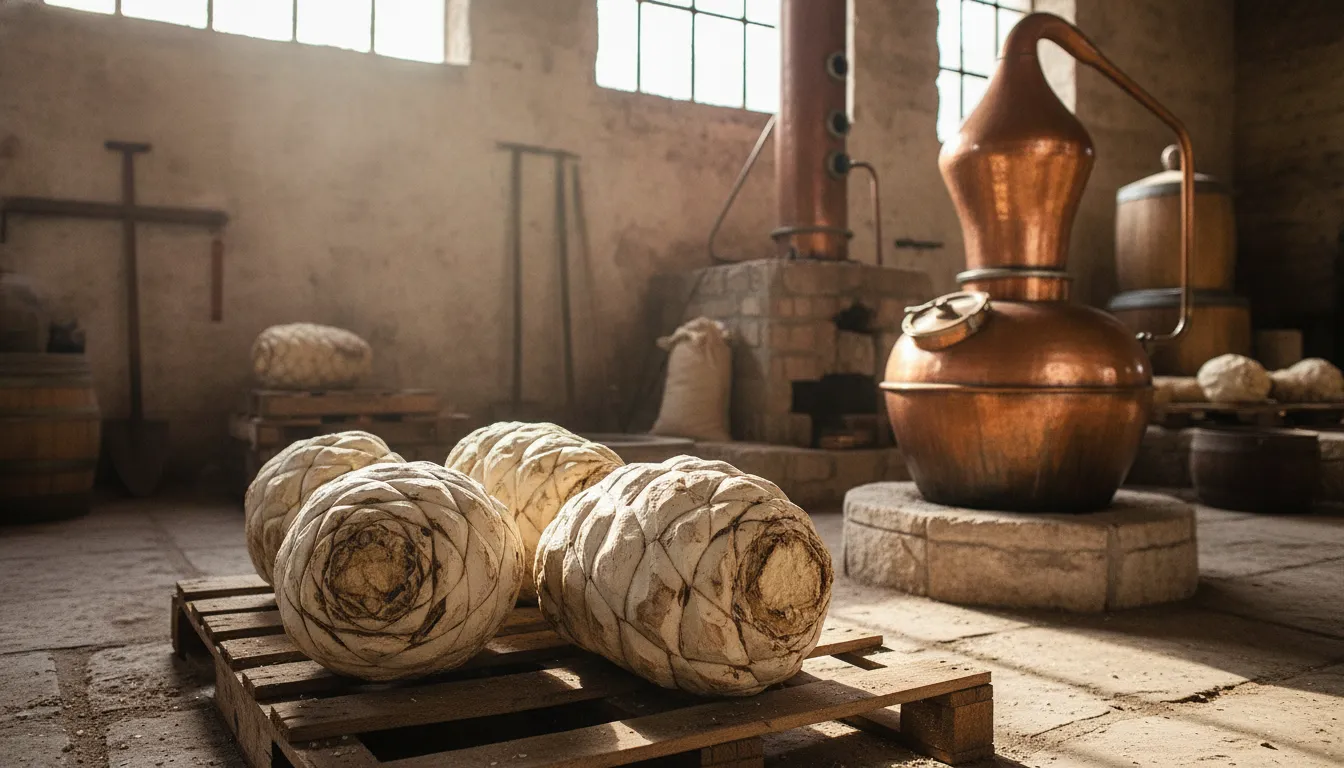
Still strength tequila begins with the same essential raw material and core production stages as other tequila. Mature blue Weber agave is cooked, its sugars are extracted, and the resulting juice is fermented before distillation. The important distinction appears after distillation, when the producer chooses whether to reduce the spirit with water before bottling.
- Cook the agave. Mature blue Weber agave is harvested, trimmed, and cooked to convert complex carbohydrates into fermentable sugars. Cooking also develops cooked-agave aromas that can carry into the finished spirit.
- Extract the juice. The cooked agave is crushed or milled so its sweet juice can be collected. The extraction method varies by producer and can influence the character of the tequila.
- Ferment the sugars. Yeast converts agave sugars into an alcoholic liquid. Fermentation time, yeast, vessel, and temperature all influence the flavors that distillation later concentrates.
- Distill the fermented liquid. Tequila is generally distilled twice in pot stills or column stills. The distiller makes cuts to collect the portion intended for the final spirit and separates less suitable early and late distillate.
- Choose the water adjustment. After distillation, many tequilas receive water to reach a consistent bottling strength. A still-strength expression omits or minimizes that post-distillation reduction.
- Prepare and bottle. The spirit may undergo additional preparation before bottling, depending on the producer and product. Still strength describes the dilution decision, not every other production method.
That final water decision can change how the tequila presents in the glass. With less dilution, the agave character and texture may feel more concentrated, while alcohol becomes more noticeable. Still strength is therefore a production and bottling choice, not a promise of superior quality. Agave, fermentation, distillation, maturation, filtration, and balance still shape the finished spirit.
For readers comparing styles, the blanco tequila collection is a useful place to see how unaged or lightly handled expressions can differ by producer. Proof is only one part of that comparison.
What Proof Is Still Strength Tequila?
Still strength tequila has no single mandatory proof. The term describes a bottling choice: the spirit reaches the bottle at, or near, the strength it had after distillation instead of being reduced to a standard level. The number printed on a specific label remains the deciding reference.
ABV means alcohol by volume, or the percentage of the liquid that is alcohol. In the United States, proof is twice the ABV. A tequila labeled 50% ABV is therefore 100 proof. Proof is a way to express strength, not a separate description of how the tequila was made.
| Expression or range | ABV | US proof | What it indicates |
|---|---|---|---|
| Common standard bottling | 40% | 80 proof | Often reached by reducing tequila with water before bottling. |
| Common still strength range | 45% to 55% | 90 to 110 proof | A common range for tequila bottled with little or no post-distillation dilution. |
| Legal tequila range | 35% to 55% | 70 to 110 proof | The CRT identifies this broader alcohol range for tequila. |
Most tequila is brought toward 40% ABV for its final bottling strength. Still strength expressions commonly land between 45% and 55% ABV, equivalent to 90 to 110 proof. That higher range reflects less water reduction, but it does not mean every still-strength bottle reaches the same number.
Use the label, not the phrase alone, when comparing bottles. A 45% ABV expression and a 55% ABV expression can both fit the broad still-strength conversation while offering noticeably different alcohol intensity. The bottle's proof also does not automatically promise additive-free production or superior craftsmanship.
If you want to compare proof with other expressions, explore the reposado tequila collection and the anejo tequila collection. Aging category and bottling strength answer different questions, so keeping them separate makes a better comparison.
How Does Still Strength Tequila Taste Different?
Compared with a standard-proof tequila, still strength tequila can feel more concentrated from the first sip. The difference comes primarily from proof. Standard tequila is commonly diluted with water after distillation, while still strength tequila skips or minimizes that reduction. More of the original alcohol concentration therefore remains in the glass.
The aroma may seem more immediate. Depending on the agave, fermentation, distillation, and maturation choices, you may notice cooked agave, pepper, citrus, herbs, fruit, or mineral notes with greater presence. Less dilution can also create a fuller, more substantial texture. The spirit may coat the tongue more noticeably than a lower-proof pour.
Alcohol heat is usually the clearest change. Still strength tequila can bring a warmer, more intense finish, especially when tasted neat. Take a small sip and give it time to open instead of judging the bottle from the first burst of heat. A few drops of water may soften the alcohol and reveal additional aromas, but that adjustment is optional.
- Aroma: Often more concentrated, although the exact notes depend on the tequila's production.
- Flavor: Agave character may feel more vivid because less water has been added.
- Texture: Higher proof can create a fuller, weightier mouthfeel.
- Heat: Expect stronger alcoholic warmth, particularly when drinking it neat.
- Quality: Intensity is not a quality score, and still strength is not an additive-free certification.
Think of the comparison as a change in volume, not a guarantee of a better song. A well-made standard-proof tequila may be more balanced for your palate, while a still-strength expression may reward slower sipping or keep its character in a cocktail.
Does Still Strength Tequila Need Water?
No. Still strength tequila does not need water to be enjoyable, and adding water in your glass is entirely optional. The key is to separate two different actions: reducing tequila at the distillery and adjusting one pour at home.
During standard production, producers commonly add water after distillation to bring the spirit toward a familiar bottling strength. Still strength tequila skips or minimizes that post-distillation reduction. The finished bottle can be enjoyed as it is. It remains a still-strength expression even if you later add water to your own glass.
When a few drops can help
Water can be useful as a tasting tool when the alcohol initially feels intense. Start with a small pour in a tasting glass and smell it before sipping. Taste it neat, noting the agave character, texture, heat, and finish. If alcohol dominates, add only a few drops, swirl gently, and let the tequila rest briefly. Taste again and compare the change.
There is no correct amount. A few drops may soften the alcohol sensation and open different aromas, while too much water can flatten the balance. Use a clean dropper or teaspoon so the adjustment stays controlled. You are not correcting the tequila, and you are not changing what the label means.
- Water is optional: Still strength tequila can be enjoyed neat.
- Start neat: Taste a small pour before making changes.
- Add gradually: Use a few drops, rest, and reassess.
- Keep the distinction clear: Glass-side dilution does not change the production style or label.
How Should You Drink Still Strength Tequila?
There is no single correct glass or serving style. Still strength tequila can be enjoyed neat, over ice, or in a cocktail. The most useful approach is to begin with the spirit on its own, then adjust the serving to suit your palate and the bottle's character.
- Start with a small neat pour. Pour a modest amount into a tulip-shaped tasting glass or another glass that gathers aromas. A smaller pour makes it easier to assess a higher-proof spirit without overwhelming your palate.
- Assess the aroma before sipping. Swirl gently and smell from a little distance. Look for cooked agave, fruit, spice, earth, or other notes. If alcohol feels prominent, give the tequila another moment in the glass.
- Taste in small sips. Notice texture, warmth, sweetness, and finish. The goal is not to prove your tolerance. It is to notice how proof changes the experience.
- Add water only if you want to. Add a few drops, wait briefly, and taste again. Keep the adjustment gradual so you can compare the undiluted pour with the softened one.
- Try it over ice. A large cube chills the tequila and slowly dilutes it as it melts. That gradual change may reveal different aromas and flavors over time.
- Use it in a balanced cocktail. Still strength tequila can work in a spirit-forward drink or a Margarita when you want agave character to stand up to citrus and sweetener. Adjust the recipe because higher proof changes the balance.
For a bottle-specific example, read about Volans Still Strength Blanco. You can also compare the wider extra anejo tequila collection when you want to see how aging and proof create different tasting experiences.
Serve responsibly, keep the pour measured, and give yourself time to enjoy the spirit slowly. Still strength is an invitation to taste with attention, not a reason to serve more.
Is Still Strength Tequila Worth Trying?
For curious tequila drinkers, the answer is often yes if you want to explore how proof changes the experience. Still strength is not a shortcut to quality, and it is not automatically additive-free. It is a production and bottling choice: the spirit reaches the bottle without the usual water reduction, so its character arrives with more concentration and alcohol presence.
Who is likely to enjoy it?
Still strength tequila can be rewarding if you enjoy tasting spirits slowly and noticing how aroma, texture, and agave character develop. The higher proof may bring a fuller texture and more intense flavor than a standard tequila bottled near 40% ABV. That intensity can make cooked agave, pepper, herbs, fruit, or earthy notes feel more pronounced, depending on the producer.
It may also appeal to collectors who want to understand a distillery's work with fewer post-distillation adjustments. However, higher proof should not be confused with greater craftsmanship. Agave quality, fermentation, distillation, maturation, filtration, balance, and transparency still shape the final spirit.
What should you look for?
Start with the label. Still strength examples commonly fall between 45% and 55% ABV, but the stated bottle strength is the detail that matters. Tequila remains a regulated category, and the CRT provides an overview of the category's standards and geographic designation. Still strength is one production detail within that larger framework.
Consider your usual drinking style, too. A neat pour lets you assess the spirit directly. A few drops of water can be a personal tasting adjustment if alcohol initially dominates. In a cocktail, the extra proof may remain more noticeable, which can be useful when you want tequila to retain its presence.
If you want a bottle-specific perspective after learning the fundamentals, read Sip Tequila's still strength blanco review. This guide explains the technical distinction, while the review explores individual bottle character.
Compare tequila options for your next tasting
Frequently Asked Questions
What is still strength tequila?
Still strength tequila is bottled at, or close to, the alcohol strength it reaches after distillation without the usual water reduction. It commonly has a higher ABV than standard tequila, but the exact proof depends on the bottle.
How strong is still strength tequila?
Many still strength examples fall between 45% and 55% ABV, or about 90 to 110 proof in the United States. The phrase does not set one required number, so always check the label.
Does still strength tequila need water?
No. You can drink it neat, then add a few drops if you want to soften the alcohol sensation or explore how the aroma changes. Water is a personal tasting adjustment, not a requirement.
Can you use still strength tequila in cocktails?
Yes. It can work in spirit-forward drinks or a Margarita when you want the agave character to remain present. Start with a measured pour and adjust the citrus, sweetener, and dilution to keep the drink balanced.
Is still strength tequila additive-free?
Not necessarily. Still strength describes how the spirit reaches bottling proof. Additive-free production is a separate claim that should be supported by producer information or a relevant product disclosure.
Browse tequila and mezcal at Sip Tequila