




Choosing a tequila is easier when you look beyond the bottle design and start with the details that shape the pour. Consider where the agave comes from, how it is cooked, and how the spirit is aged. That matters especially when you are comparing several expressions from one producer.
Volans tequila is a Los Altos, Jalisco tequila listed by Sip Tequila as additive-free and triple-water crafted, made at El Pandillo Distillery under NOM 1579 with Master Distiller Felipe Camarena. Its lineup includes Blanco, Still Strength Blanco, Reposado, Anejo, and Extra Anejo expressions. So the right bottle depends on whether you prefer bright agave, oak influence, or deeper aged flavors.
This guide separates confirmed product details from general tequila education, then applies both to the buying decision. We will begin with Volans's provenance and the production information currently documented for the brand.
Shop the Volans tequila collection and compare the current expressions.
What Is Volans Tequila?
Volans tequila is a Los Altos highland tequila collection associated with El Pandillo Distillery in Jesus Maria, Jalisco. Sip Tequila's current collection page identifies Felipe Camarena as Master Distiller and lists NOM 1579 for the distillery. For shoppers, those details provide useful production context. The region, distillery, and NOM help identify where the tequila is made and connect the bottle to a specific place and producer.
Los Altos is widely known as a highland tequila region, but region alone does not tell you whether a bottle will suit your palate. The more useful question is what expression you want to drink. Production details matter, too. Volans gives buyers a named distillery and master distiller. The range includes Blanco, Still Strength Blanco, Reposado, Anejo, and Extra Anejo expressions. The collection page describes the line as additive-free and triple-water crafted. Treat that wording as current catalog information from Sip Tequila, not as an independent certification or a claim that one tequila is automatically better than another.
- Place: Volans is identified with El Pandillo Distillery in Jesus Maria, in the Los Altos region of Jalisco.
- Production identity: Felipe Camarena is listed as Master Distiller, and NOM 1579 identifies the distillery associated with the tequila.
- Shopping range: The collection spans unaged and aged styles, so the best starting point depends on your preferred flavor profile and drinking occasion.
That traceability is especially helpful when you are comparing bottles. A NOM number can tell you more about a tequila's production provenance, while a product page can give you expression-specific details that do not apply to the entire brand. For example, the live Volans Blanco tequila page describes mineral, citrus, and clean agave character. Those notes belong to that expression, not automatically to every Volans bottle.
In short, Volans is best understood as a producer- and place-specific tequila range with multiple styles to explore. Start with the expression, read the current product details, and use the distillery and NOM information to understand the bottle's provenance.
How Is Volans Tequila Made?
Volans tequila follows a production sequence that begins with highland agave and ends with a double distillation in copper pot stills. Sip Tequila's live Volans collection lists highland agave grown at 6,800 feet, cooking in dual steam stone and brick ovens. Milling with a modern tahona, fermentation in stainless steel using a proprietary strain, and distillation in copper pot stills.
That sequence matters because each stage can shape the character of the finished spirit. Cooking converts the agave's stored carbohydrates into fermentable sugars. Milling then separates the cooked material into a juice and fiber mixture that can be prepared for fermentation. You can see the broader process in Sip Tequila's guide to how tequila is made, while the collection identifies the Volans-specific methods and facility details.
From highland agave to fermentation
The Volans collection identifies its agave as highland agave from Los Altos, Jalisco. It lists dual steam stone and brick ovens for cooking, rather than treating cooking as an invisible step. After cooking, the agave is milled with a modern tahona. A tahona crushes cooked agave to help release its juice, and that material moves into stainless-steel fermentation vessels. Volans' collection page specifies a proprietary fermentation strain, but it does not provide a public technical profile for that strain.
That is where the verified detail ends. Do not infer a flavor result from the word "proprietary."
Distillation and what the NOM tells you
After fermentation, the collection lists double distillation in copper pot stills. Distillation concentrates and refines the fermented liquid, while the still design and the distiller's decisions influence which aromas and flavors remain in the spirit. The collection associates this production with El Pandillo Distillery in Jesus Maria, Los Altos, Jalisco, and identifies Felipe Camarena as Master Distiller.
The collection also lists NOM 1579. A NOM is a production identifier that connects a tequila to an authorized producer and facility. For a plain-language explanation of the code, read what Volans NOM 1579 means. The NOM is useful provenance information, not a shorthand quality score.
- Volans-specific: highland agave at 6,800 feet, dual steam stone and brick ovens, modern tahona milling, proprietary-strain stainless fermentation, and double copper-pot distillation.
- General tequila education: cooking makes agave sugars available, fermentation creates an alcoholic wash, and distillation refines that fermented liquid.
- Practical takeaway: use the production details to understand the bottle's provenance, then evaluate the individual expression and its current product description before buying.
Which Volans Tequila Expression Should You Choose?
The best starting point depends on whether you want bright agave character, a softer oak influence, or a more developed sipping profile. Volans offers a useful range, from Blanco and Blanco Still Strength through Reposado, Anejo, and Extra Anejo. The product pages provide the most current details for each bottle, while the table below offers a quick way to narrow your choice.
| Expression | What the product page highlights | A good fit if you want |
|---|---|---|
| Volans Blanco tequila | Mineral, citrus, and clean agave character from a Los Altos highland tequila. | A clear look at the agave-led profile, neat or in a cocktail. |
| Blanco Still Strength | Listed as a Volans expression by the official site and current collection. | A still-strength format, after confirming the current product details. |
| Volans Reposado expression | Rested in American white oak bourbon barrels for under a year, with honeyed, oak, stone-fruit, and pepper notes. | A bridge between fresh agave character and noticeable barrel influence. |
| Volans Anejo tequila | A limited release made with tahona-crushed agave and multi-origin oak aging. | A more mature expression with a limited-release context. |
| Volans Extra Anejo | Aged for 3+ years in bourbon casks, with vanilla, oak, and smoked-almond complexity. | Slow-aged depth and a richer, contemplative sipping style. |
Match the bottle to your palate
Choose Blanco when you want the least barrel-driven expression and want mineral, citrus, and clean agave notes to lead. It is also the most direct option for learning what the producer's Los Altos style tastes like before oak becomes part of the profile.
Reposado makes sense when you enjoy some softness and oak but still want a lively tequila. Its listed honey, stone-fruit, and pepper notes offer more flavor direction than a purely agave-forward pour without moving as far into extended aging. Anejo and Extra Anejo are better candidates when your priority is a mature sipping experience. The Anejo is a limited release with tahona-crushed agave and multi-origin oak aging. While the Extra Anejo brings a specifically stated 3+ years in bourbon casks and notes of vanilla, oak, and smoked almond.
- For bright, agave-centered character, start with Blanco.
- For a balance of agave and barrel influence, consider Reposado.
- For a more developed pour, compare Anejo and Extra Anejo by their stated aging details and flavor profiles.
- For Blanco Still Strength, verify the live product page before buying because the available details can change.
Age is not a quality ranking. It is one way to anticipate the balance between agave and oak. Current stock can also change, so confirm the live product page before making a final choice.
How Do Volans Aging Categories Change the Pour?
Aging changes how tequila tastes, feels, and fits a drinking occasion. It does not create a simple quality ladder. A well-made blanco can be more appealing than an older tequila when you want bright agave character, while barrel-aged expressions may suit a slower, richer pour. The category gives you useful context, but your palate should make the final call.
These are the standard tequila category definitions. They describe the general aging ranges, not automatically the production details of every Volans expression.
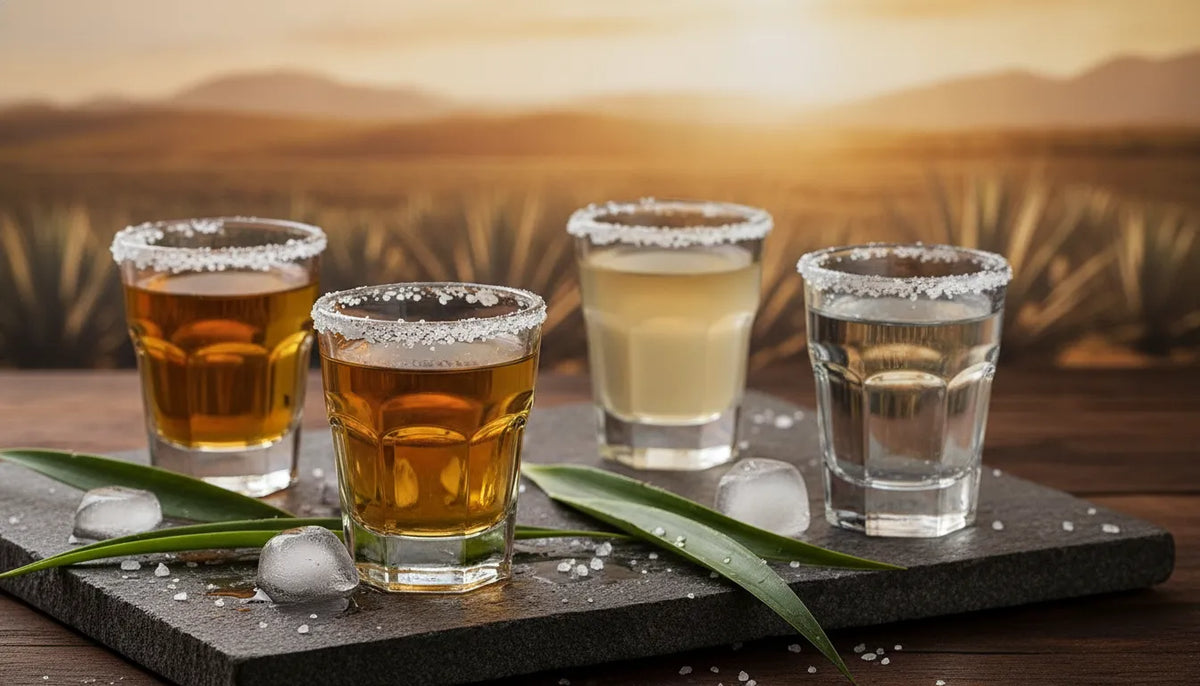
- Blanco: Unaged or minimally aged, with the agave character usually closest to the center of the pour.
- Reposado: Aged from 2 to 12 months, allowing some barrel influence while retaining a noticeable agave foundation.
- Anejo: Aged from 1 to 3 years, typically bringing more developed oak and baking-spice impressions alongside the spirit.
- Extra Anejo: Aged for 3 years or more, often with the deepest barrel influence and a rounder, slower-sipping profile.
For a closer explanation of these categories, see Sip Tequila's guide to tequila expression types. The distinctions can help you narrow a bottle, but they should not replace reading the current product description or tasting notes.
Match the category to the occasion
Choose a blanco when you want a crisp pour, a clear sense of cooked agave, or a versatile base for a cocktail. It can also be the most revealing choice when you want to focus on the spirit's unwooded character. Reposado works well when you want some softness and oak without moving too far from agave-driven flavor. It is a practical middle ground for sipping or for drinks where a little barrel character adds depth.
Anejo and extra anejo are better considered as deliberate sipping choices when you enjoy more time in the glass. Their longer aging can bring greater emphasis to oak, vanilla, dried fruit, spice, or roasted notes, depending on the tequila and cask. That does not make them inherently better. It makes them different tools for your palate and your serving plan.
When comparing Volans tequila expressions, start with the category, then check the specific bottle's verified notes and aging description. Look for the profile you actually want to drink rather than choosing the oldest label by default.
What Makes Volans Tequila Unique?
Volans tequila stands out through a combination of place, people, production choices, and range. The brand is associated with Los Altos, Jalisco, a highland region known for growing tequila agave. And Sip Tequila's current collection identifies El Pandillo Distillery in Jesus Maria as the production site. The collection also names Felipe Camarena as master distiller and lists NOM 1579. Those details give you a more useful way to evaluate the brand than a broad claim that one tequila is simply better than another.
The production profile adds another layer. The collection describes highland agave grown at 6,800 feet, cooking in dual steam stone and brick ovens. Milling with a modern tahona, fermentation in stainless steel using a proprietary strain, and double distillation in copper pot stills. Each choice can influence the spirit's texture and flavor, but the important point is the combination. Volans presents a defined production identity rather than relying only on an aging label or a premium-looking bottle.
Volans is also described in Sip Tequila's catalog as additive-free and triple-water crafted. Treat those as current product and catalog descriptions, not as independent certification claims. The phrase additive-free is not a reason to assume every drinker will prefer the tequila. Your palate, the expression, and the occasion still matter.
The range makes that evaluation practical. The lineup includes Blanco, Still Strength Blanco, Reposado, Anejo, and Extra Anejo expressions, along with limited or collection items. A Blanco can show the character of the agave and production more directly, while barrel-aged expressions add oak-driven dimensions. For example, the Reposado page describes honey, oak, stone fruit, and pepper. And the Extra Anejo page describes more than three years in bourbon casks with vanilla, oak, and smoked-almond notes. These are expression-specific descriptions, not promises about what every bottle will taste like.
- Provenance: Los Altos, Jalisco, with production listed at El Pandillo Distillery in Jesus Maria.
- Named expertise: The collection identifies Felipe Camarena as master distiller and lists NOM 1579.
- Production identity: The catalog details highland agave, oven cooking, tahona milling, stainless fermentation, and copper-pot distillation.
- Choice: Multiple expressions let you compare agave-forward, rested, and mature oak-influenced profiles.
In short, Volans is distinctive because these documented elements work together. To compare the current lineup and confirm which expressions are available, visit the Volans tequila collection.
What Should You Check Before Buying Volans Tequila?
A thoughtful purchase starts with the bottle that matches your palate, not simply the oldest category available. Use the product page and the live collection as your final reference, since expression details and stock can change.
- Choose the expression for your sensory goal. If you want mineral, citrus, and clean agave character, begin with the Volans Blanco tequila. For a softer, oak-influenced profile, the Volans Reposado expression is described with honeyed, oak, stone-fruit, and pepper notes. The Anejo and Extra Anejo are better considered when you specifically want more oak and maturation influence.
- Check the age category, rather than treating age as a quality ranking. Blanco is unaged or minimally aged, Reposado is generally aged for two to 12 months. Anejo for one to three years, and Extra Anejo for three or more years. These categories help predict the balance between agave character and barrel influence. For product-specific details, review the Volans Anejo tequila and Volans Extra Anejo pages.
- Read the current product-page details. Confirm the expression name, tasting description, aging statement, bottle format, and any listed production information before ordering. Do not rely on a search snippet, an older review, or a static article to answer a current product question.
- Check provenance and the NOM. Sip Tequila's Volans collection lists NOM 1579, El Pandillo Distillery in Jesus Maria, Los Altos, Jalisco, and Master Distiller Felipe Camarena. If you want to understand how a NOM helps identify a distillery, read what Volans NOM 1579 means.
- Confirm live availability. The collection has included products shown as sold out, so check the live Volans tequila collection and the specific expression page immediately before purchase. Availability should be verified at checkout, not assumed from an old guide.
- Review delivery and age requirements. Alcohol orders require age verification, and delivery eligibility can depend on the destination's laws and the carrier's procedures. Enter an accurate delivery address, review the retailer's current shipping terms, and make sure an eligible adult can receive the order where required.
- Match the expression to the flavors and oak influence you actually want.
- Use the product page for current details, stock, and delivery information.
- Use NOM 1579 and the listed distillery to evaluate provenance, not as a shortcut for judging taste.
Explore the Volans selection before you choose your bottle.
Frequently Asked Questions
Where is Volans tequila made?
Volans is made at El Pandillo Distillery in Jesus Maria, in the Los Altos region of Jalisco, Mexico. Sip Tequila's collection page identifies the operation as NOM 1579 and names Felipe Camarena as master distiller.
What makes Volans tequila unique?
Its point of difference is the combination of Los Altos provenance, a named distillery and master distiller. And a production approach that includes highland agave, tahona milling, stainless-steel fermentation, and copper-pot distillation. These details describe how the collection is presented, not a claim that it is universally better.
Is Volans good tequila?
Whether it is good for you depends on your palate and preferred style. The Blanco is described with mineral, citrus, and clean agave notes, while aged expressions add oak and other barrel-influenced flavors. Use the expression's profile and your intended pour as the guide.
Who owns Volans tequila?
Volans' official website describes the brand as family-owned. The available product information also identifies Felipe Camarena in the production and master-distiller context, but it does not establish a more specific individual ownership structure.
Which Volans expression is best for a first pour?
Start with Blanco if you want to taste a clean agave profile with mineral and citrus notes. Choose Reposado if you prefer honeyed, oak, stone-fruit, and pepper character. Those are starting points, not a quality ranking.
Choosing a bottle is easier when you can compare expressions by age, production details, and flavor profile. Use what you learned in this guide to narrow the selection to the pour that best matches your palate and occasion.
Explore the current Volans selection and choose the expression that fits your preferences.