


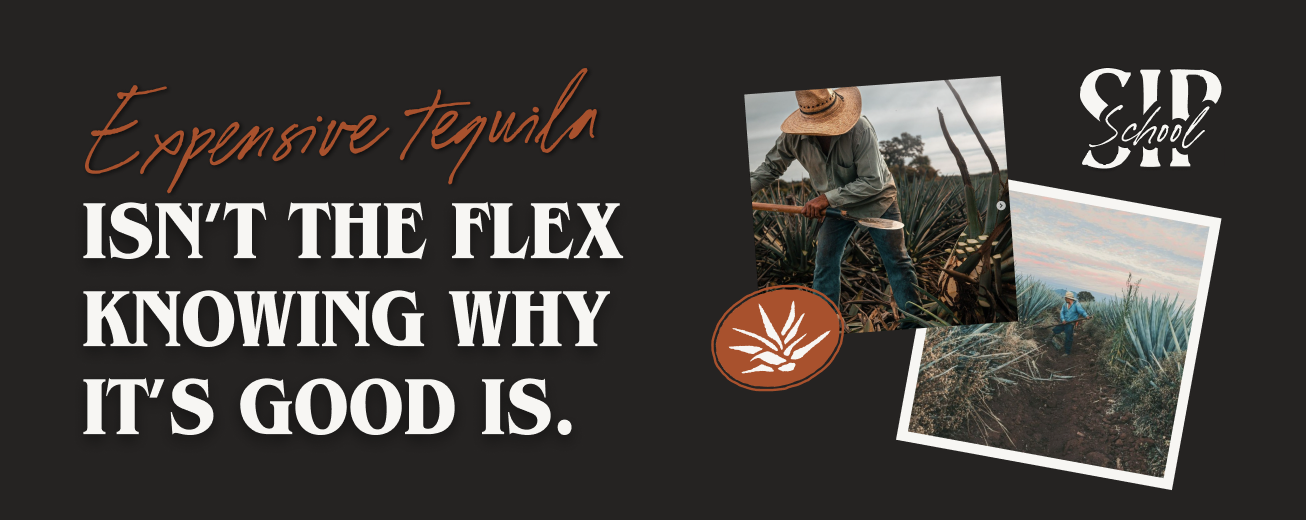
Expensive tequila isn't the flex. Knowing why it's good is.
Anyone can pay for a good bottle. But here's the part worth knowing: none of the flavors you love in tequila appear by accident. The roasted sweetness, the fruit you can't quite place, the clean finish, the vanilla warmth. Every one of them is earned at a specific stage between the agave field and the bottle. Good tequila is chemistry with patience.
So consider this your syllabus. Four stages, four flavors, and by the end you'll know exactly what you're tasting and why. (For the full field-to-bottle journey, our guide to how tequila is made goes deeper on every step.)
The Oven: Where the Sweetness Is Earned
Before agave can become tequila, its starches have to become fermentable sugars, and that transformation happens with heat. There's a fast way and a slow way. Industrial autoclaves can pressure-cook agave in a matter of hours. Traditional brick ovens, called hornos, take the slow route: gentle heat over a much longer stretch, gradually caramelizing the piña's sugars the same way sugar turns golden in a pan.
That slow caramelization is where tequila's signature roasted sweetness comes from. It's baked in, never added. As Difford's Guide's production deep-dive lays out, the cooking method is one of the biggest flavor decisions a producer makes, and you can taste the difference a patient oven makes in the very first sip of a well-made blanco.
The Fermentation: Where the Fruit Is Earned
Here's the stage most drinkers never think about, and it's arguably the most interesting: fermentation is biochemistry with good taste.
Once the cooked agave is crushed and its juices are collected, yeast goes to work converting sugar into alcohol. But alcohol isn't all it makes. Along the way, yeast throws off esters, the aromatic compounds responsible for the fruity and floral notes in your glass. That hint of pear, the citrus lift, the white flowers on the nose of a great blanco? Those were written in the fermentation tank.
This is why yeast is one of a distillery's most closely guarded assets. Some producers cultivate their own proprietary strains for exactly this reason: change the yeast, and you change the fruit.
The Still: Where the Clean Is Earned
Distillation isn't just concentration, it's selection. Every run comes off the still in three parts: the heads, the hearts, and the tails. The heads and tails carry harsher compounds. The hearts are the cleanest, purest stretch of the run, and only the hearts should make the bottle.
Here's the catch: the tighter a distiller cuts to the hearts, the more liquid gets left behind. A patient cut literally costs the producer tequila. That's the tradeoff behind a spirit that tastes bright, precise, and clean instead of hot and muddled. When a tequila finishes without any rough edges, you're tasting a distiller's discipline.
The Barrel: Where the Vanilla Is Earned
Nobody adds vanilla to good tequila. Oak does.
When tequila rests in a barrel, the spirit interacts with the wood and slowly pulls out compounds like vanillin and tannins, which you experience as vanilla, caramel, baking spice, and gentle structure. As Tequila Authority's aging guide details, extraction is fastest in the early weeks and deepens with time, which is why a reposado tastes kissed by oak while an extra añejo tastes steeped in it. The longer the rest, the deeper those flavors run, and every month in the barrel is a month of patience on the producer's part.
The Takeaway: Taste With the Map
Put it all together and tequila stops being one mysterious flavor and becomes four legible ones. The roast came from the oven. The fruit came from the ferment. The clean came from the cut. The vanilla came from the wood.
This is also the quiet beauty of additive-free tequila: when a producer earns every flavor at these four stages, there's nothing left to add. If you want to go deeper on that philosophy, read what additive-free tequila means and why it matters, then put the whole lesson into practice with our guide on how to taste tequila like a pro. And when you're ready to shop the philosophy, our entire additive-free collection is built on it.
Taste the Lesson
Class dismissed, homework assigned. Right now, bottles that showcase every stage of this lesson are in our Summer Sunset Sale, where the more you buy, the more you save (10% off any bottle, 15% off three, 20% off six, mix and match). Like summer, they're almost gone, and we can't promise they're coming back.
- Arette Artesanal Blanco ($59.99): taste the oven's work in a benchmark additive-free blanco.
- Calle 23 Blanco ($54.99): made with proprietary yeast strains cultivated by a biochemist founder, this is the fermentation lesson in a glass.
- El Gran Legado Still Strength ($69.99): bottled straight from the still, no dilution, the hearts and nothing but.
- Cabal Reposado ($89.99): the barrel's vanilla and spice, rested just long enough.
- Avion 44 Extra Añejo ($349.99): 44 months in oak, for anyone who wants the barrel chapter in long form.
Shop the Summer Sunset Sale while they last. Salud.